The Hidden Golden Triangle: The Untouched Echoes of Tonk
Bundi: A Monsoon Symphony Unveiling Timeless Marvels Welcome to the enchanting town of Bundi, where wishes are whispered in the embrace of a lively…


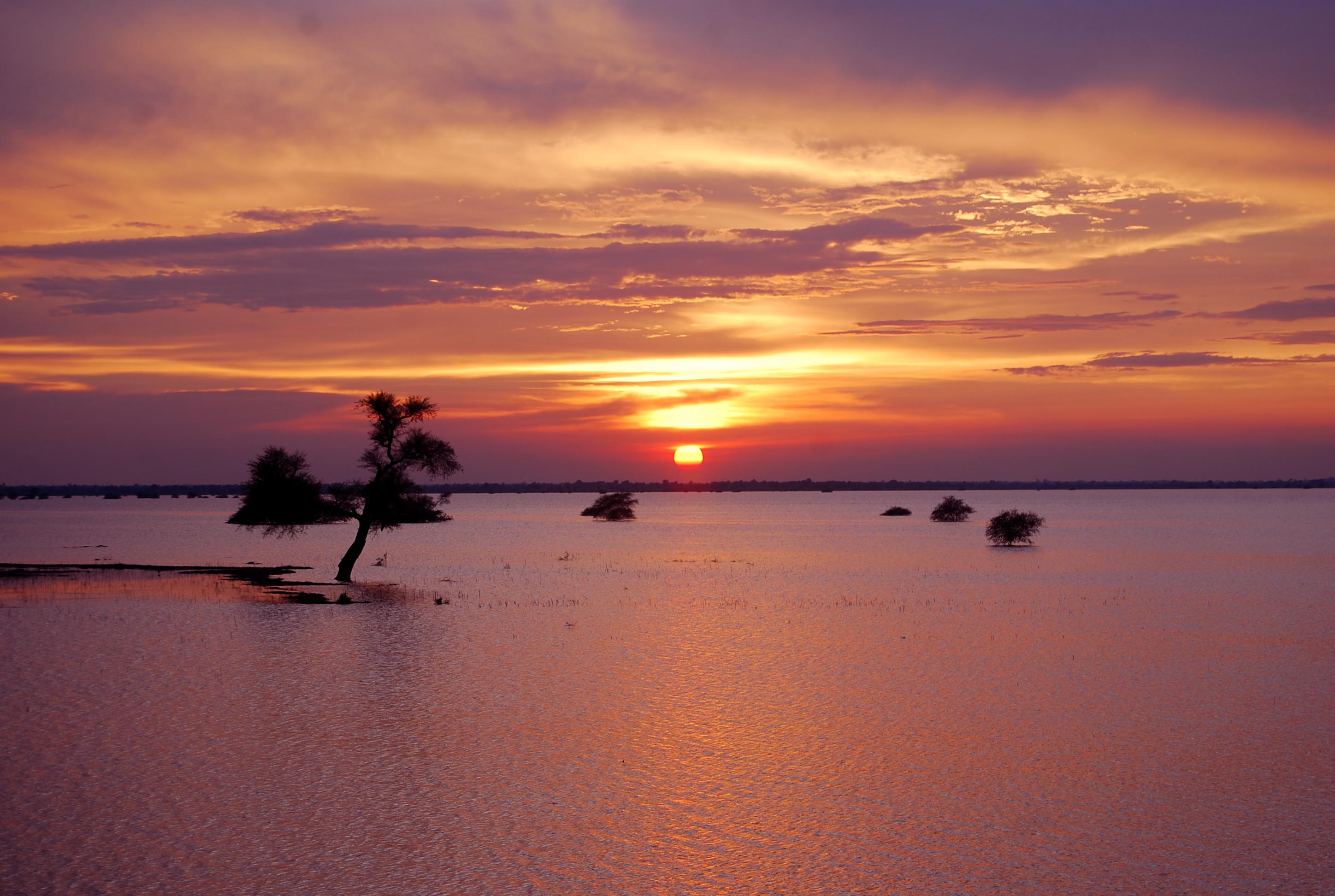
Welcome to the enchanting town of Bundi, where wishes are whispered in the embrace of a lively monsoon, and the heavens generously bestow their blessings upon this hidden gem. Imagine a day in the month of Sawan when the spirited southwest monsoon graces Bundi with its animated dance. Picture a morning downpour followed by a gentle drizzle that caresses the landscapes throughout the day.
As the clouds gracefully drift from one mountain-top lookout tower to the next, they unveil mesmerising shades of blue that stretch beyond the realms of imagination. An occasional visitor to the earthly realm, the breeze descends to playfully ruffle your hair. Clouds gracefully descend, wrapping everything in a moist, comforting blanket. The sun, a humble observer, allows the clouds to hold sway, casting a magical ambience over Bundi.
With these ingredients in perfect harmony, Bundi becomes more than perfect—it becomes a dream. Stroll along lazy lanes and vibrant bazaars, exploring the rich tapestry of Havelis, baoris, and mosques. Discover the temples that earned Bundi the moniker of 'Chotta Kashi.' Embrace the freedom to choose – whether to pedal through the town on a bicycle, cruise in a mobike, or explore the landscape in a car, encountering locals cooking, bathing, and playing in the numerous tanks, lakes, streams, and waterfalls.
Bundi beckons with open arms, inviting you to a symphony of nature, history, and culture. Let the magic of Bundi unfold before you, where every moment is a brushstroke painting on a canvas of unforgettable memories.
Nestled in splendid seclusion, Bundi stands as an undiscovered gem, inviting intrepid souls to unravel its hidden heritage. The name Bundi originates in Bunda Meena, the fearless leader of the Meena tribe, who once governed this captivating realm. Imbued with historical and cultural richness, the town reveals enthralling narratives that echo back to the 12th Century when the HadaChauhans laid the foundations of the renowned Hadoti state.
A haven of magnificent palaces and formidable forts, Bundi resonates with the echoes of epic battles and tales of extraordinary courage. Nature has generously adorned this land with glistening rivers, crystalline lakes, and enchanting waterfalls. Amidst the lush greenery, a sanctuary is created for rare flora and fauna, composing a harmonious symphony of biodiversity.
Bundi's allure transcends its physical landscapes, captivating the hearts of esteemed painters, authors, and artists spanning generations. Icons such as Rabindranath Tagore and Rudyard Kipling drew inspiration from its captivating beauty. Sir Rudyard Kipling, in particular, stood in awe of the Taragarh Fort, attributing its construction not to mortals but to celestial beings—an affirmation of the otherworldly charm that defines Bundi.
Embark on a journey through the mesmerising town of Bundi, where history gracefully unfolds across centuries. Picture a 14th-century Rajput royal in search of an ideal hilltop within the Aravalli Range, envisioning the rise of a fort and the subsequent ebb of life into the valley below over eight centuries. This picturesque panorama sets the stage for Bundi's diverse offerings, inviting explorers to immerse themselves in the region's captivating temporal, geographical spread.
Allow meandering days to discover the hidden gems with a relaxed schedule that dedicates time to surrounding locales. Talwas, Dugari, and Indergarh beckon with their unique charms, seamlessly blending into the rich tapestry of Bundi's narrative.
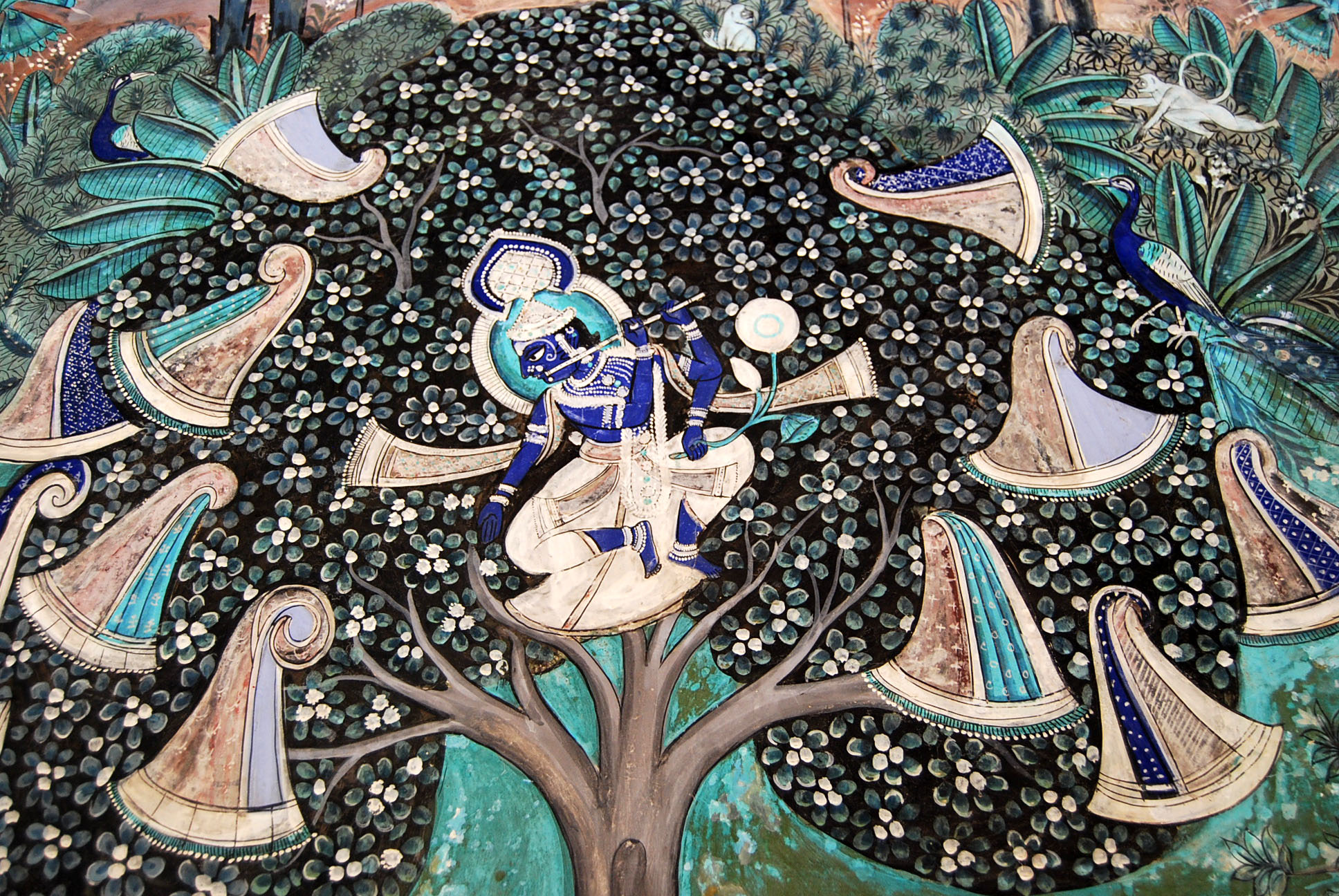
Garh Palace, a fortified complex, stands as a resurrected splendour, echoing tales of kings from the 17th to the 18th centuries. Journey through the grand Hathi Pol into a realm adorned with local stone in quintessential Rajput-style architecture – jharokhas, pillars, and intricately carved brackets. Murals within the Chhatra Mahal, Phool Mahal, and Badal Mahal beckon, each a testament to the artistic prowess of bygone eras.
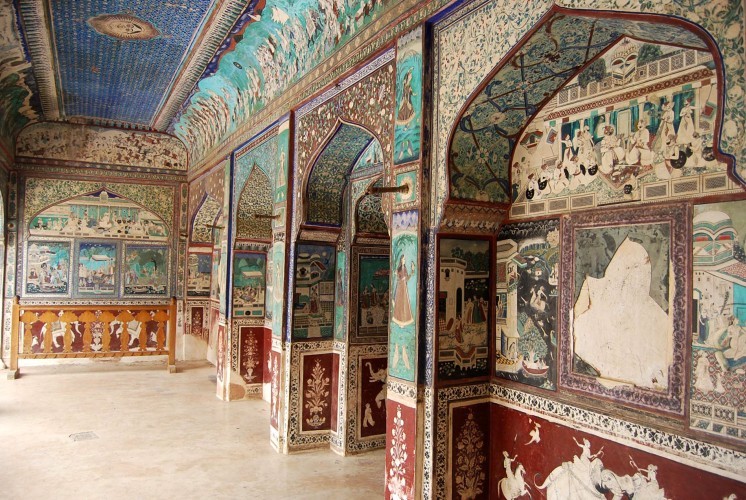
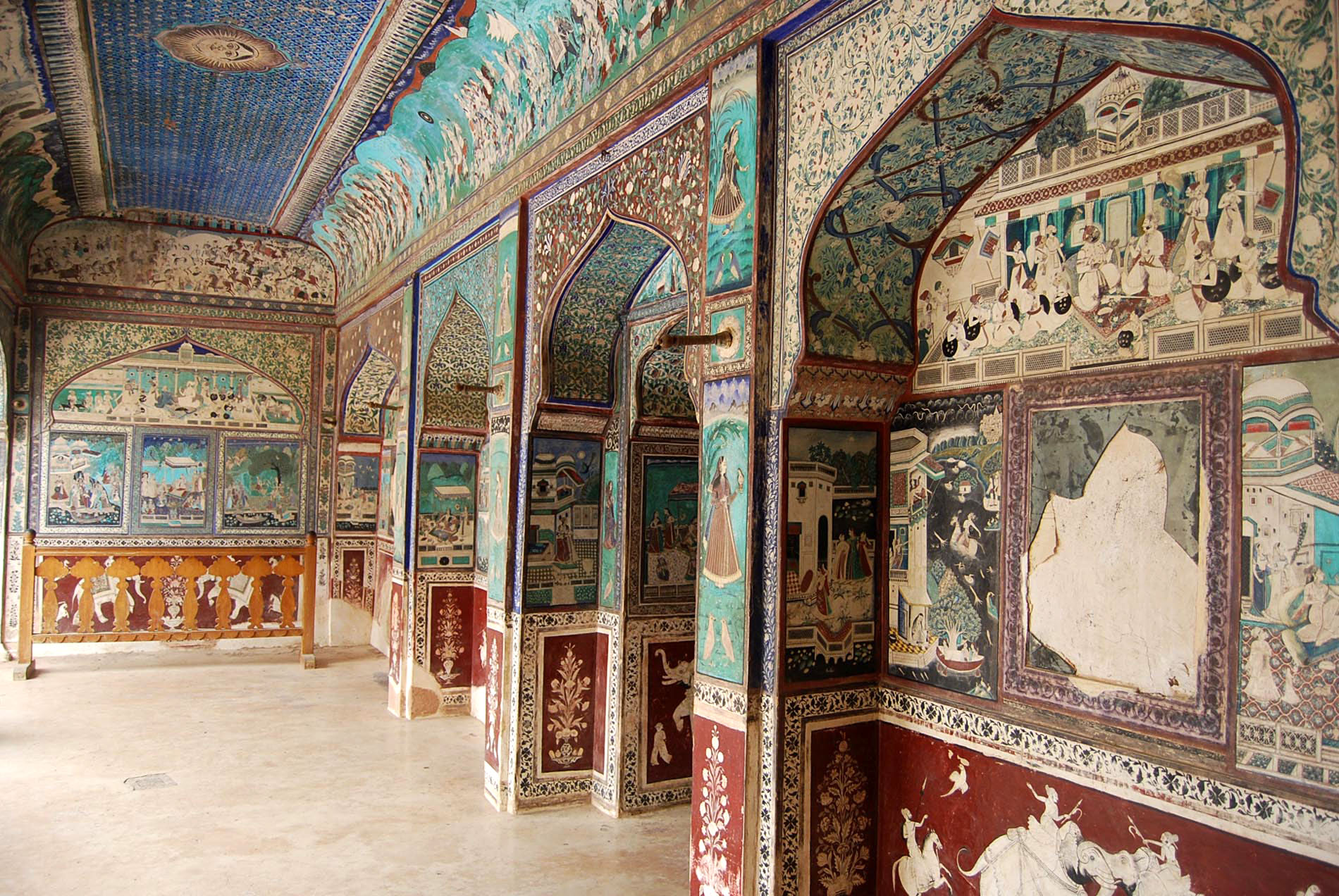
Nestled within Garh Palace, the Chitrashala, also known as Ummed Mahal, is a painted retreat. Constructed in the 18th Century, this collection of rooms perched on a raised platform above a garden courtyard is a visual delight of paintings adorning walls and ceilings, beckoning visitors into an artistic reverie.
Ascend from Garh Palace to the formidable Taragarh Fort, perched atop a 1,426-foot high hill. Despite its 14th-century origins and dilapidated appearance, the fort rewards with bewitching sunsets, imposing bastions, and the lingering aroma of a disappearing past.
Bundi's charm extends to its 50-odd ancient step-wells – Baori, vav, kund, vapi, Sagar – each a testament to different shapes of collected water and the myriad shades of collective lives. These wells and tanks, crucial water sources in this easily dehydrated land, weave a captivating narrative akin to a museum brimming with memories.
The cultural tapestry extends to the Raniji-ki-Baori, a 17th-century stepwell commissioned by Rani Nathvatiji, showcasing exquisite ornamentation. Adjacent to it lies DhabhaiKund, creating fascinating geometries with its steps. The town also reveals the Nagar Sagar and the impressive Bhoraji-ka-Kund. Nawal Sagar, an 18th-century lake embellished with the Varuna Temple, graces the head of Bundi, while Jait Sagar hosts Sukh Mahal and Kshar Bagh to the northeast. ChaurasiKhambonki Chhatri, a 17th-century cenotaph, captivates with its artistic brilliance, and Phool Sagar, a 17th-century palace, though closed to the public, captivates with its serene location by a lake. Shikar Burj, an 8 km jaunt northwest, once a hunting lodge, now serves as a charming picnic spot. Each place near Bundi unfolds a unique chapter, beckoning travellers to explore the rich tapestry of history and nature.
Near Bundi, a journey unfolds to enchanting destinations that promise a blend of history, architecture, and natural beauty. Dugari, situated 65 km northeast, boasts the serene Kanak Sagar Lake, a haven for migratory birds in winter. The accompanying fort, adorned with Bundi-style wall paintings depicting Ras Lila and Radha-Krishna, adds a touch of historical grandeur. Indragarh, 77 km northeast, reveals the 17th-century fort and town founded by Indrasal Singh Hada. The impressive ruins offer panoramic views, and the palaces within—Hawa Mahal, Janana Mahal, and Supari Mahal—boast Bundi's signature frescoes. Bijoliyan, 48 km southwest, is a small town adorned with 13th-century Shiva temples surrounding the picturesque MandakiniKund.
Another breathtaking beauty near Bundi is the Gadaria Mahadev Temple. A must-visit place, it stands as a testament to architectural beauty and spiritual tranquillity. The temple, adorned with intricate carvings, offers a serene escape for devotees seeking solace.
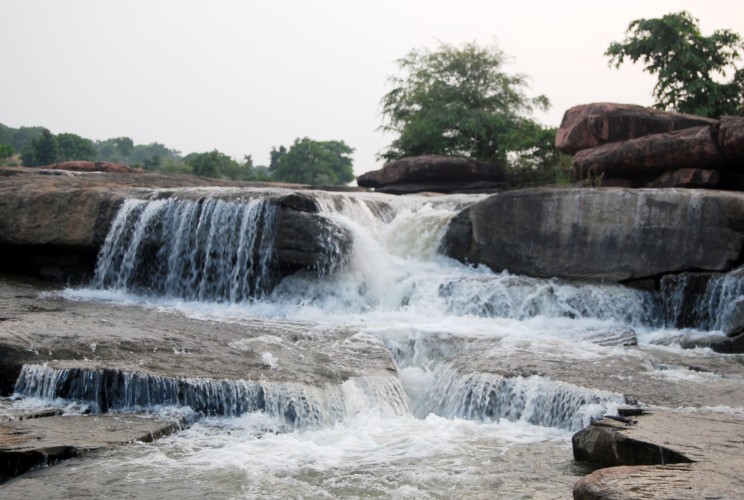
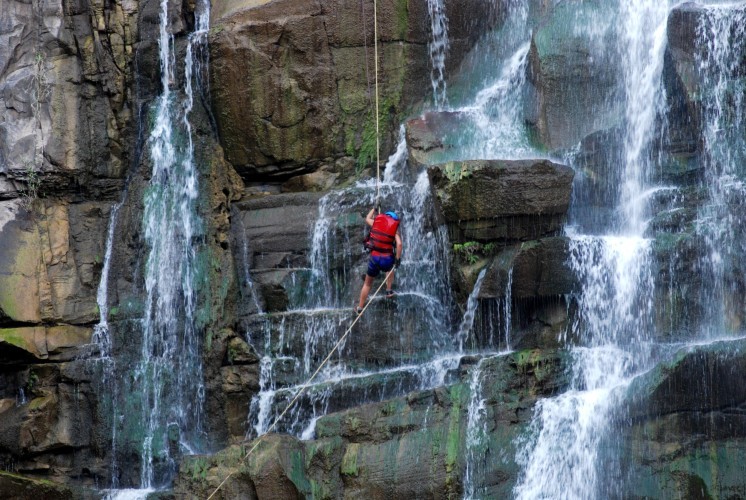
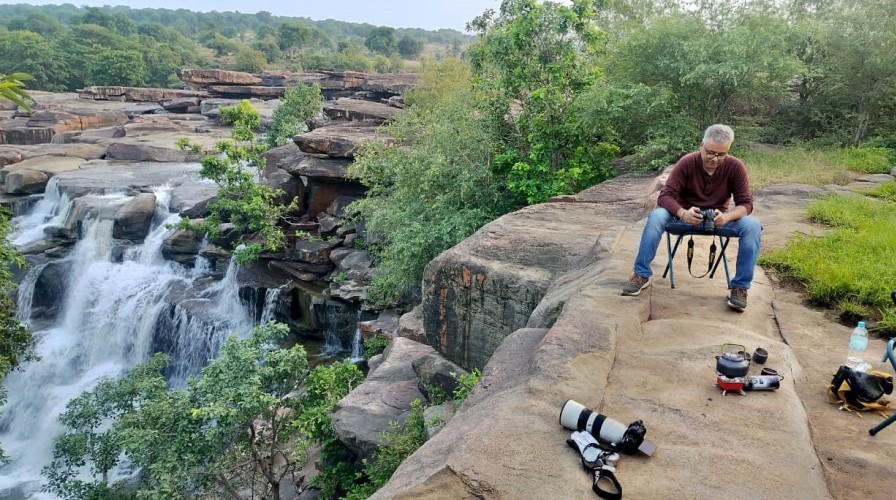
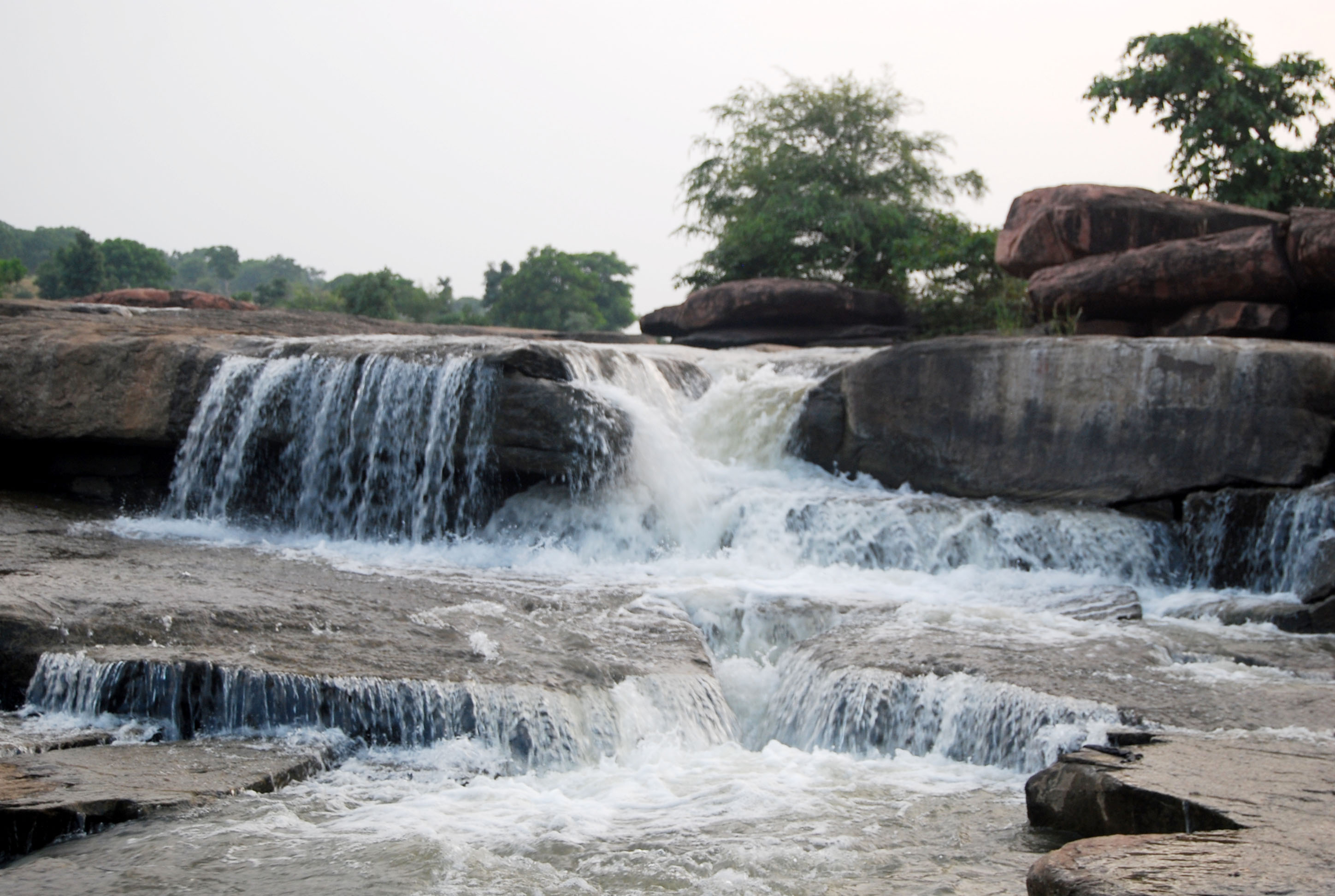
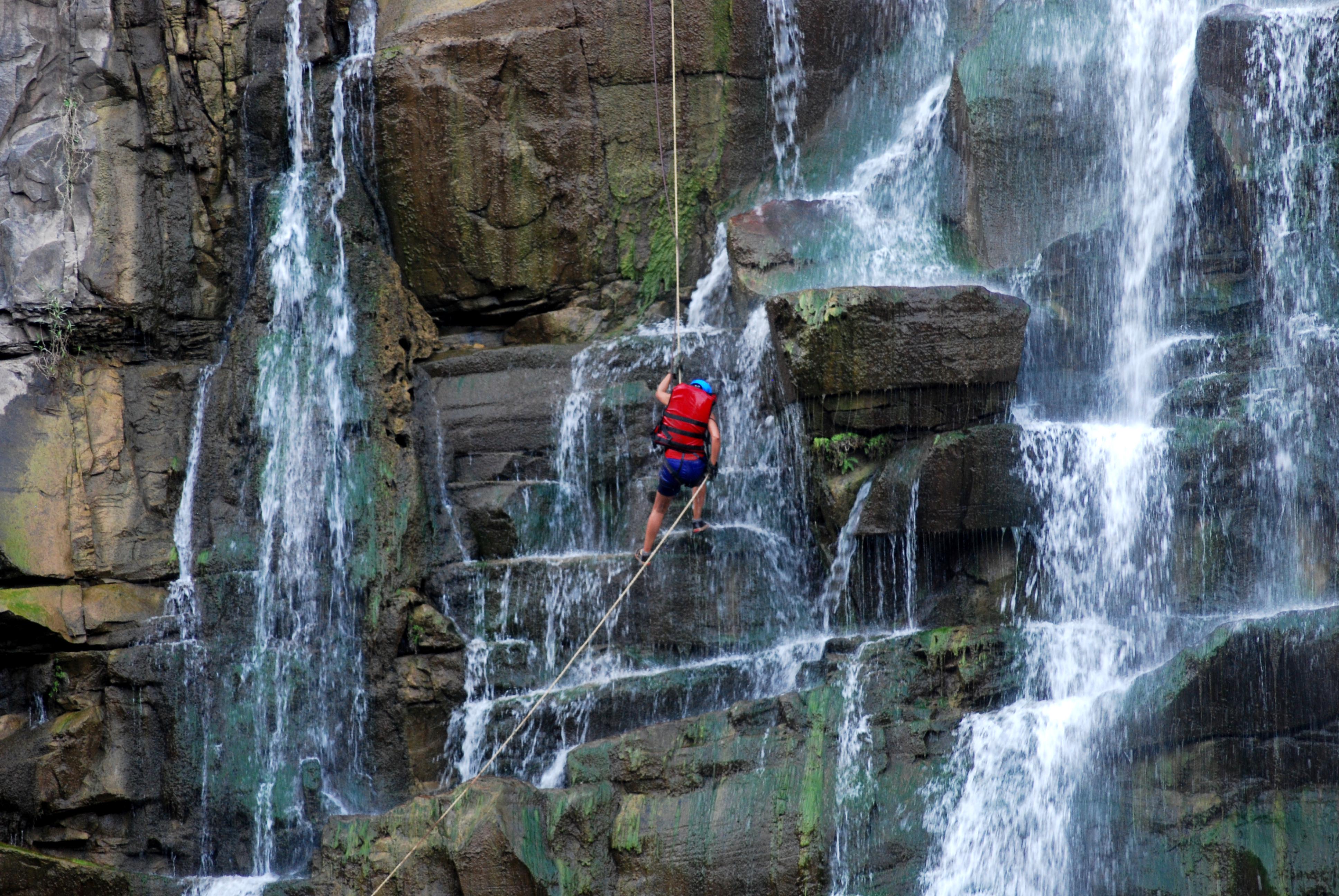
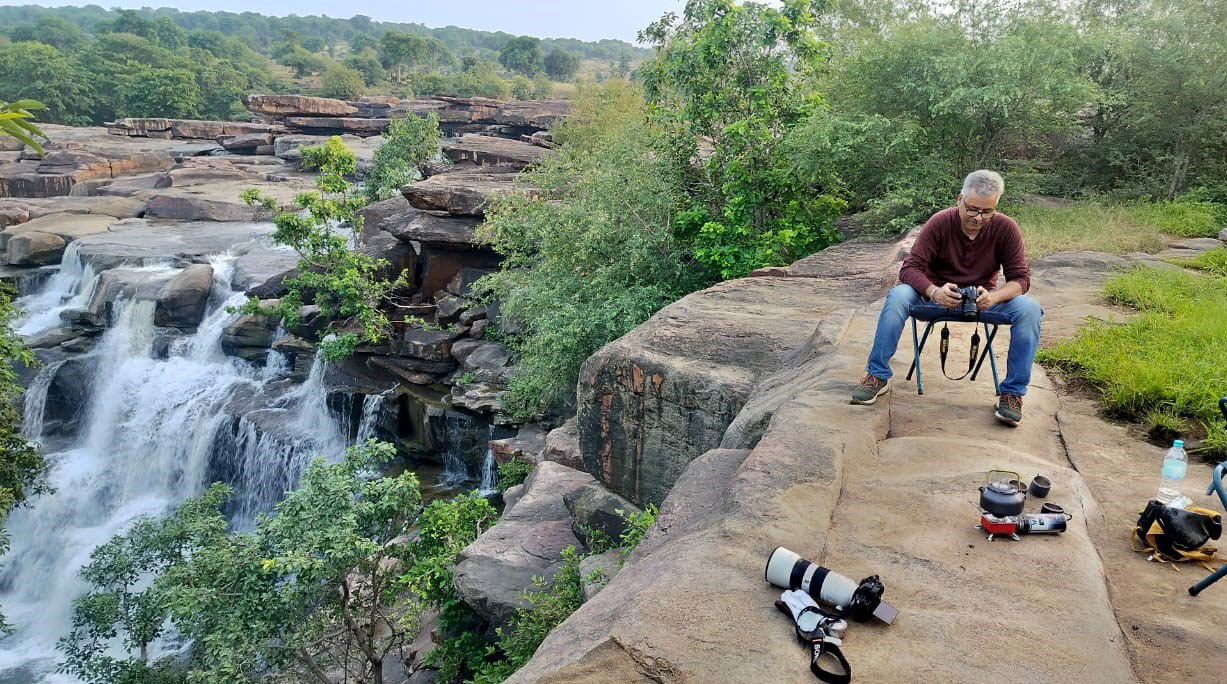
Nestled amidst the enchanting landscapes between Bundi and Chittorgarh, the Bhimlat Mahadev temple unveils the breathtakingBhimlat Waterfalls, a natural marvel that transcends time. Originating from the seismic embrace of the 8th century, this cascading masterpiece stands as a testament to the Earth's raw power.
Bhimlat Waterfalls, with its verdant embrace and colossal presence, transforms into a haven where tiredness dissipates, replaced by the tranquillity of the surroundings. A visit to this natural wonder promises not just a visual feast but a soul-stirring encounter with the majestic forces of nature, making it an indispensable gem on the map of tourist delights.
A treat for art connoisseurs, the Bundi School of Painting is a distinct and one of the most beautiful styles of Rajasthani miniature art. The most famous of the Bundi style is perhaps the Ragmala is a narrative portrayal in spectacular colour. It is one of the most prominent schools for the Rajasthani style of Indian miniature painting that were dominated from the 17th to the end of the 19th Century.
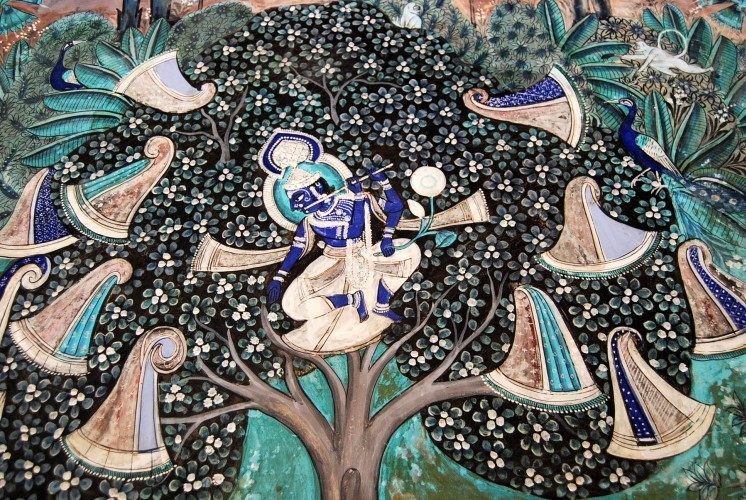
One of the earliest examples of the Bundi Paintings is the ChunarRagamala, which was painted in 1561. Bundi's paintings emphasised on hunting, court scenes, festivals, processions, the life of nobles, lovers, animals, birds and scenes from Lord Krishna's life. The Bundi School had a close association with the Mughal style, yet it was never fundamental to the evolution and growth of Bundi paintings, however, the delicacy of the Mughal style was also not abandoned.
The Chitrashala, also known as the Ummed Mahal, is a part of the Garh Palace. It was built in the 18th Century and forms a set of rooms on an elevated podium above the garden courtyard. The famous Chitra Shala in Bundi provides a colourful glimpse of history. The walls and ceiling of this palace are completely covered with paintings of the Bundi School, which are still in excellent condition. These splendid paintings in the Chitrashala are par excellence and can be compared with probably the best anywhere in the world.
Explore destinations through a sharper lens. Our location-specific blogs uncover hidden gems and cultural nuances, delivering immersive, bite-sized stories that make every journey more meaningful.
Bundi: A Monsoon Symphony Unveiling Timeless Marvels Welcome to the enchanting town of Bundi, where wishes are whispered in the embrace of a lively…