
The journey into Sikkim’s heart is defined by a profound sensory shift. The moment the first sharp, resinous whiff of burning juniper steers its way into your near-frozen nose, you know it is April. While the landscape remains breathtaking every month of the year—shifting through the emerald mists of July and the golden clarity of October—there is a specific, crystalline quality to the air in spring that makes the ascent toward Gangtok feel like a true transition into the celestial.
The journey begins with the drive from Siliguri, an experience often split between two worlds: the cramped, physical reality of a shared jeep and the exhilaration of hanging outside the window to catch the spray of the mountain air. The road follows the wild and turbulent Teesta River, a constant, churning companion marked by the colorful rafting camps of Chitrey, the industrial silhouette of Malli’s beer factory, and the administrative hum of the Rangpo check post. It is a route defined by humble roadside shacks where the ritual of steaming momos and chilled beer allows you to slowly shed the heavy heat of the plains.
In Gangtok, existence can be distilled into a minimalist, self-imposed silence. In a world of unnecessary noise, one can run an entire life on just six words: “Good morning” at the reception, “Momos” for lunch, “Wine” after that, and a final “Good night.” It is a city that rewards the deconstructing traveler, offering a utopian liquor situation where subsidized spirits are an integrated part of the social fabric. Here, you’ll find little roadside joints with glasses chained to the counter—a place to pay, take a shot, wipe your mouth with the back of your hand, and step back into the mountain mist without a word.
To truly understand the city’s structure, one must move beyond the standard "Toks" and embrace the steep, winding footpaths. Enchey Monastery, perched like a sentinel above the town, is the preferred sanctuary for those seeking the hypnotic resonance of morning chants. It is here that the old, wise monks offer a curt reminder that spiritual readiness isn't a destination but a state of being.
Nearby, the Namgyal Institute of Tibetology stands as a masterclass in traditional Tibetan masonry and golden-finial aesthetics. It acts as a vital repository for rare scriptures, priceless antiques, and gorgeous thangkas, spearheading the study of the region's deep intangible heritage. Further afield, the Rumtek Monastery—the largest in Sikkim—maintains a specialized section where monks retreat into complete isolation for years, seeking a quietude that mirrors the surrounding peaks.
The scene changes dramatically the moment you head out of the main town toward The Ridge. Walking here reveals a beautiful Buddhist cemetery where prayer flags flutter in a silent conversation with the wind. On a good day, the Kanchenjunga range reveals itself in all its majestic glory. The peaks serve as a living clock, shifting from blinding white to a bruised purple and finally a fiery gold as they catch the day's last light. For those seeking the tactile soul of the city, the interconnected layers of Old Market, New Market, and Lal Market offer a dense exploration of Sikkimese curios and commerce.
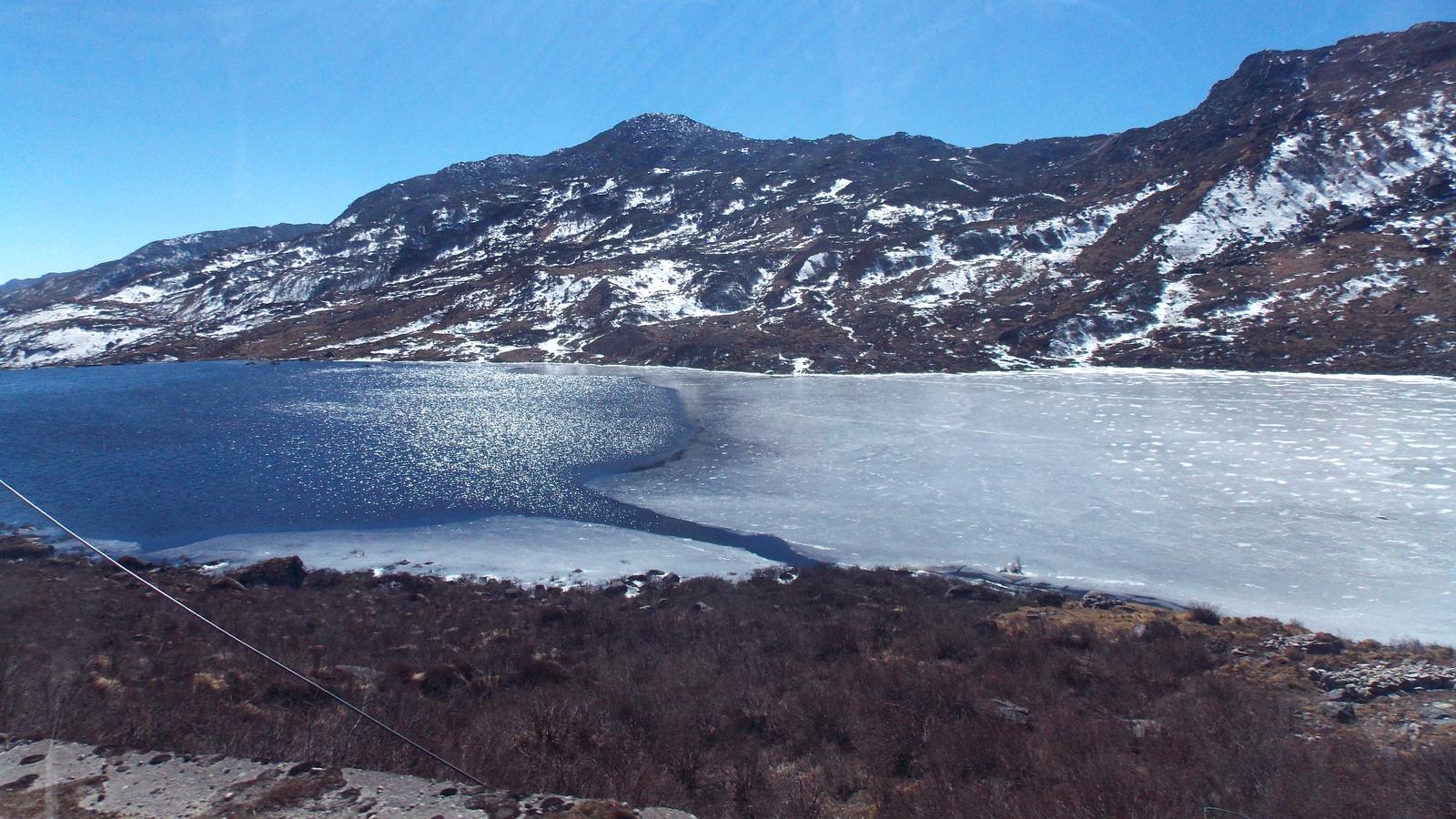
Gangtok remains the indispensable axis for the high-altitude wonders of the north. A 40-km drive leads to the magical Tsomgo Lake at 12,400 feet. Surrounded by jagged, frozen hillsides, the lake looks like something lifted from a Japanese calendar—picture-perfect and partially frozen even in the spring.
It is a fragile, silent ecosystem, serving as a winter sanctuary for exotic migratory birds. Beyond the lake, the road continues its rugged climb toward the frontier at Nathu-la, where the air grows thin and the horizon opens toward China. From the vibrant, beer-subsidized streets of the capital to the silent, frozen shores of the high-altitude lakes, Gangtok is the heartbeat of the Sikkim experience.
Moving west toward Pelling, the atmosphere undergoes a palpable shift. The vibrant, urban energy of the capital gives way to a profound sense of antiquity and stillness. This is a landscape defined not just by its height, but by its deep historical roots as the former heart of the Sikkimese kingdom.
At the center of this spiritual geography lies the Pemayangtse Monastery, a 300-year-old wooden marvel of the Nyingma order. Its weathered timber beams and thick stone foundations house one of the most extraordinary feats of Buddhist craftsmanship in the world: the Zandog Palri. This seven-tiered, hand-carved wooden model represents Guru Rinpoche’s celestial palace. Every level is a dense thicket of miniature deities, rainbows, and mythical animals, painstakingly rendered to serve as a three-dimensional map of a divine realm. For the visitor, it is a masterclass in how architecture can transcend physical space to become a vessel for complex metaphysics.
A short walk through a lush, bird-rich forest leads to the Rabdentse Ruins, where the narrative of Sikkim takes a more somber, structural turn. Once the second capital of the kingdom, it now stands as a minimalist lesson in historical defense and spatial planning. The crumbling stone walls and open-air courtyards offer a skeletal view of royal life from the 17th to the 19th centuries.
There is an intentionality to its placement; the ruins are framed by the massive, overwhelming backdrop of the Kanchenjunga range. Standing among the remnants of the King’s bedchamber or the stone throne of the Chogyal, one experiences a powerful juxtaposition: the transient nature of human empires versus the eternal, indifferent majesty of the Himalayas. Here, the "architecture" is as much about the void—the framed views of the peaks and the valley below—as it is about the remaining stone.
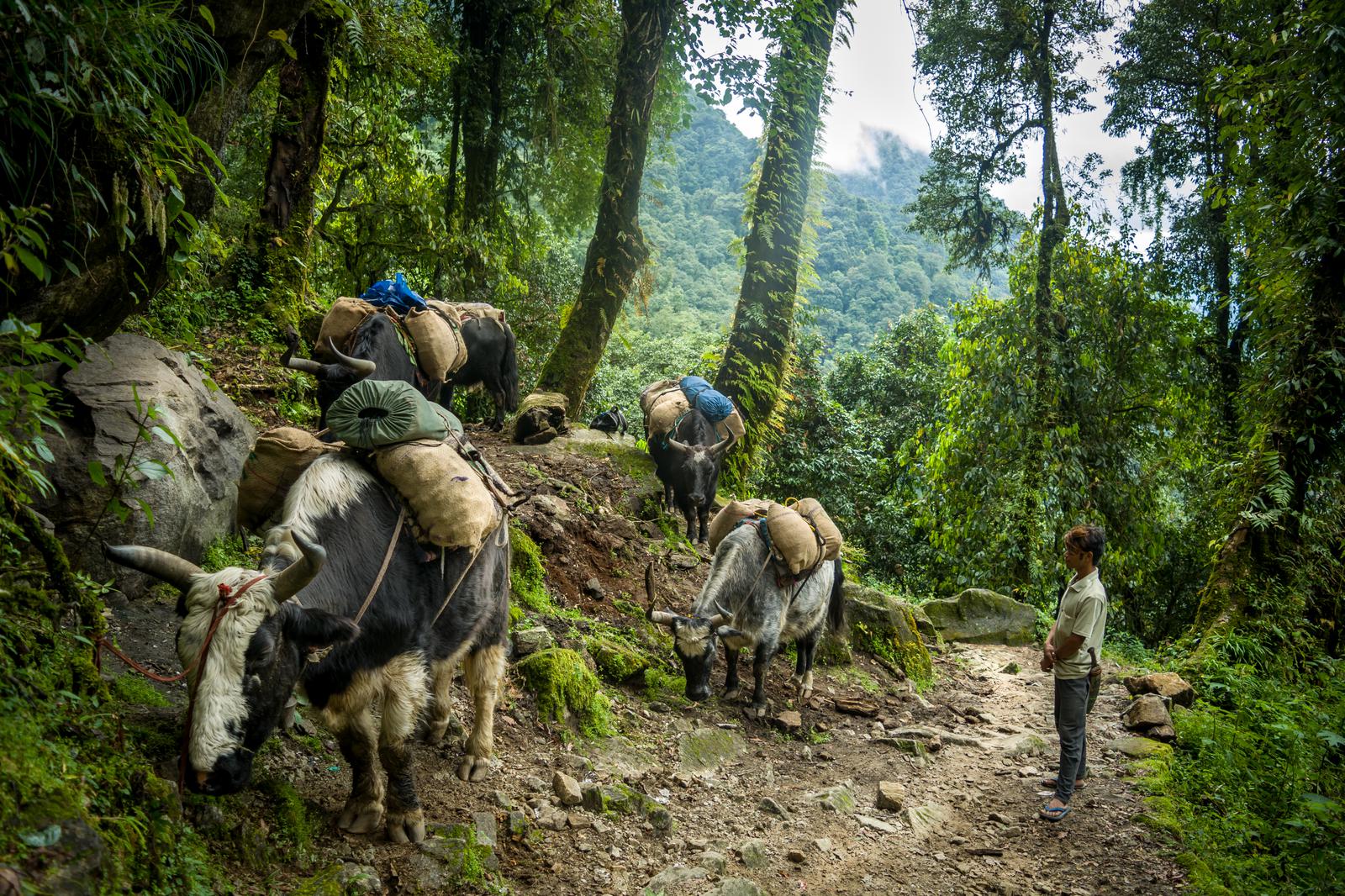
As you push further into the rugged embrace of North Sikkim, the landscape undergoes a dramatic transformation, leaving behind the lush sub-tropical forests for a stark, high-altitude wilderness. This northern reach is anchored by the twin gateways of Lachen and Lachung, two mountain settlements that serve as the final outposts of settled life before the terrain ascends into the ethereal.
In Lachen, the "Big Pass," the architecture is a sturdy reflection of the climate, characterized by traditional houses of heavy stone and seasoned timber designed to withstand the biting Himalayan winters. Here, the cultural heartbeat of the Tibetan plateau remains vibrant, governed by the unique Pipon system—a traditional form of local self-governance that has managed the community's resources and social order for generations. Across the neighboring valley, Lachung sits in a softer contrast, nestled amidst sprawling apple orchards and alpine meadows. It serves as the threshold to the famed Yumthang Valley, the "Valley of Flowers," where the tree line eventually surrenders to the desolate, oxygen-thin landscape of Zero Point (Yumesamdong).
The journey toward the roof of the world reaches its penultimate chapter at the Thangu Army Base. This vital cluster of wooden structures stands as a final sanctuary of warmth and human presence before the road dissolves into the high-altitude cold desert. At this elevation, nature becomes an overwhelming force, and the air carries a persistent chill that signals the proximity of the divine.
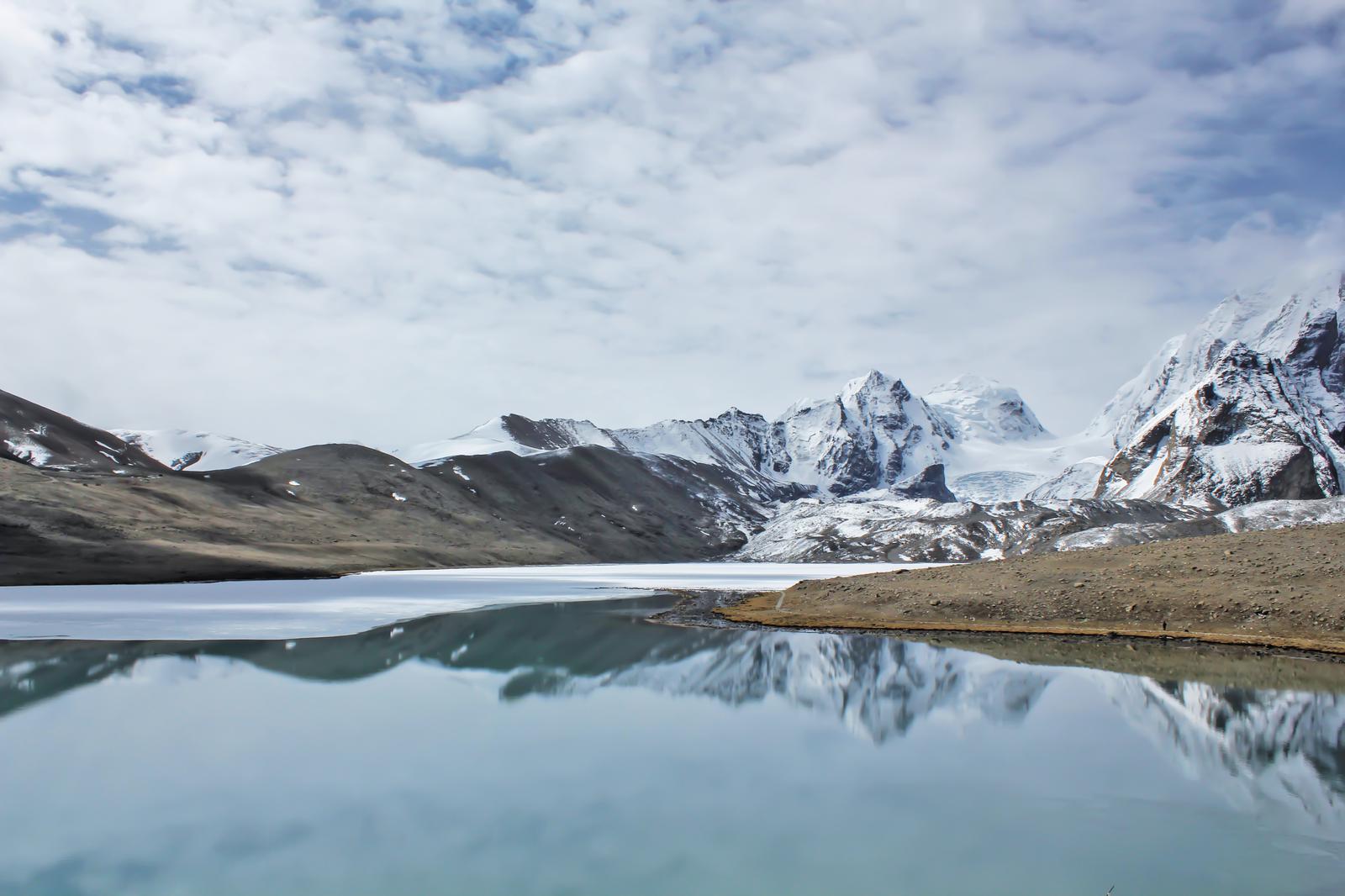
The odyssey culminates at the breathtaking expanse of Gurudongmar Lake. Resting at a staggering 17,800 feet, the lake’s sapphire waters sit in stark relief against a deep turquoise sky and the surrounding sun-bleached peaks. In this place of extreme altitude and profound silence, human intervention is humbled and reduced to the most graceful of gestures. There is no grand architecture here; only the modest, inclusive walls of a Sarva Dharma Sthal and the tireless flutter of prayer flags, their colors bleeding into the wind as they carry silent invocations across the sacred, unfreezing waters.
The festivals of Sikkim are grand spectacles of color and faith. Saga Dawa, the most sacred day for Mahayana Buddhists, celebrates the birth, enlightenment, and nirvana of Lord Buddha with massive processions carrying holy scriptures through the streets of Gangtok.
One of the most visually arresting celebrations is Pang Lhabsol, unique to Sikkim, which pays homage to Mount Kanchenjunga as the guardian deity of the land. During this festival, the "Chaam" (masked dances) are performed, where lamas dressed as warrior deities leap and whirl to the clash of cymbals. Losar, the Tibetan New Year, and Losoong, the Sikkimese New Year, mark the harvest season with family feasts, traditional archery contests, and the symbolic burning of effigies to cast away the misfortunes of the past year.
Sikkimese cuisine is a masterclass in sustainability and fermentation, designed to provide energy in a cold, demanding climate. The most recognizable ambassador is the Momo, a steamed dumpling filled with meat or vegetables, but the local palate goes much deeper.
Thukpa, a hearty noodle soup laden with vegetables and meat, is a staple comfort food. However, the true soul of the kitchen lies in fermented foods like Gundruk (fermented leafy greens) and Sinki (fermented radish roots), which allow for the consumption of vegetables long after the growing season has ended. No Sikkimese meal is complete without Dalle Khursani, one of the world's hottest chillies, often pickled with oil and spices. To wash it all down, locals turn to Chaang (or Tongba), a warm, fermented millet beer served in a bamboo canister and sipped through a wooden straw—a drink that is as much a social ritual as it is a beverage.
Whether you are drawn by the minimalist quiet of a high-altitude monastery, the intricate craftsmanship of a celestial palace, or the rugged exhilaration of the northern frontier, Sikkim offers a journey that transcends mere sightseeing. We invite you to step into this vertical world—where every snapping prayer flag, weathered stone ruin, and frozen turquoise peak tells a story of enduring beauty, profound silence, and spiritual discovery. Come, find your own "six words" amidst the juniper-scented air and the majesty of the Himalayas.