

The ancient city of Khajuraho, situated within the Chhatarpur district of Madhya Pradesh, stands as a breathtaking testament to the artistic and spiritual zenith of the Chandela Dynasty. Once a sprawling metropolis of eighty-five temples covering twenty square kilometers during the 12th century, the site has been weathered by time until only twenty-five structures remain. These surviving monuments, now a UNESCO World Heritage site, represent the pinnacle of Nagara-style architecture.
Beyond their sheer number, the temples are a marvel of medieval engineering. Built primarily of sandstone hauled from the quarries of Panna, the stones were put together using mortise and tenon joints, held in place by gravity alone without the use of mortar. This precision allowed the Chandela architects to create the signature "beehive" tower, or Shikhara, which symbolizes Mount Meru, the cosmic center of the universe in Hindu cosmology.
The orientation of these temples is equally deliberate; almost all face east to greet the rising sun, ensuring that the first rays illuminate the deity in the inner sanctum, or Garbhagriha. This alignment reflects the Chandela belief in the sun as the ultimate source of life and spiritual awakening. Furthermore, the temples are built on high masonry platforms called Jagatis, which physically and symbolically elevate the devotee from the mundane world into a celestial realm.
Built between 950 and 1050 AD, the temples serve as a profound narrative of the human experience. They blend the divine with the earthly through intricate carvings of deities, nayikas, and scenes of daily life. These carvings are not merely decorative; they follow the principles of Vastu Shastra and Shilpa Shastra, where every curve and posture is designed to represent a specific emotional state or spiritual teaching. The presence of the Apsaras and Surasundaris—depicted in acts of grooming, dancing, or playing music—captures the concept of Lila, or the divine play, suggesting that the path to liberation includes the celebration of beauty and worldly existence.
The Western Group represents the most iconic and architecturally sophisticated cluster in Khajuraho, located conveniently near the local archaeological museum. This group is distinguished by its soaring shikharas and a staggering density of nearly 870 sculptures adorning both interior and exterior walls. At the heart of this cluster sits the Kandariya Mahadeva Temple, the most magnificent of all Khajuraho monuments. Its design mimics a mountain range, rising in successive towers to represent Mount Kailash, while its lintel features a four-armed Shiva flanked by Brahma and Vishnu. Nearby, the Chitragupta Temple serves as a rare sanctuary dedicated to Surya, the Sun God, featuring a striking eleven-headed statue of Lord Vishnu. The Jagdambi Temple, named for Goddess Parvati, is equally celebrated for its appealing sura-sundaris and deep, expressive carvings that capture celestial beauty in stone.
The Eastern Group is unique for its harmonious coexistence of Hindu and Jain sanctuaries, offering a quieter and more reflective atmosphere than the bustling western cluster. The Vamana Temple, dedicated to the dwarf incarnation of Lord Vishnu, and the Javari Temple, built slightly later, showcase the evolution of stone carving skills. The Javari Temple is particularly famous for its delicately carved Makara Torana arch, a masterpiece of medieval craftsmanship. This group also preserves a significant Jain legacy, headlined by the Parsvanatha Temple. Constructed from honey-colored sandstone, it is the largest Jain shrine in the region and is notable for incorporating Vaishnava imagery alongside Jain deities, illustrating the religious pluralism of the era. Other structures like the Adinatha Temple, Santinatha Temple, Ghantai Temple, and Brahma Temple further enrich this group with their specific historical and architectural features.
Located further from the main clusters, the Southern Group represents the later period of Chandela architecture and is characterized by a shift toward verticality and unique iconographic choices. The Duladeo Temple, often referred to as Kunwar Math or the Bridegroom’s Temple, is famous for the flying celestials on its upper towers and the incredibly detailed carved jewelry adorning its female figures. Complementing this is the Chaturbhuja Temple, which stands as a fascinating anomaly within Khajuraho because it is the only major temple that lacks erotic sculptures. Instead, it draws visitors with a massive idol of a four-armed Vishnu. The sculpture is carved with such dynamism that the deity appears as if he is about to step forward from the sanctum to bless his devotees, marking a powerful conclusion to the Khajuraho pilgrimage.
To fully grasp the magnitude of what was lost over the centuries, a visit to the Archaeological Survey of India Museum is essential. This facility houses salvaged masterpieces that provide context to the surrounding ruins. Among its most exquisite displays are an 11th-century statue of Sambhava Nath located in the Jain gallery, a rare six-headed Varaha, and a whimsical dancing Ganesha. These artifacts, well-displayed with their prospective ages, serve as a vital link to the eighty-five original temples, ensuring that the exceptional architectural skill of the Chandela craftsmen continues to inspire awe in the modern world.
While the temples are the heart of the region, the spirit of Khajuraho extends far beyond its ancient walls. The surrounding landscape offers a vibrant tapestry of living traditions, untamed wilderness, and geological wonders that invite travelers to look deeper into the heritage of Madhya Pradesh.
The journey into the soul of the region often begins at the Adivart Tribal and Folk Art Museum. This immersive space transcends the traditional museum experience by featuring twelve authentic houses that represent the diverse tribal communities of the state, including the Bhil, Korku, Baiga, Gond, Saharia, Bharia, and Kol. Each dwelling is meticulously adorned with traditional kitchen utensils, furniture, and artifacts that breathe life into the daily rhythms of these communities. Visitors are transported through galleries of intricate paintings, sculptures, and musical instruments that celebrate the creative pulse of tribal culture.
For those drawn to spiritual history, the Jain Museum, formerly known as Sahu Shanti Prasad Jain Kala Sangrahalaya, offers a serene exploration of Jain heritage just a kilometer from the city center. Its garden serves as an open-air gallery for the exquisite sculptures of the twenty-four Jain Tirthankaras, while the interior provides a profound look into their lives and the enduring traditions they inspired. Further afield, the Maharaja Chhatrasal Museum, or Dhubela Museum, sits poignantly on the banks of Dhubela Lake. Established in 1955 by the descendants of the great warrior king, it preserves the royal legacy and martial history of the Bundelkhand region.
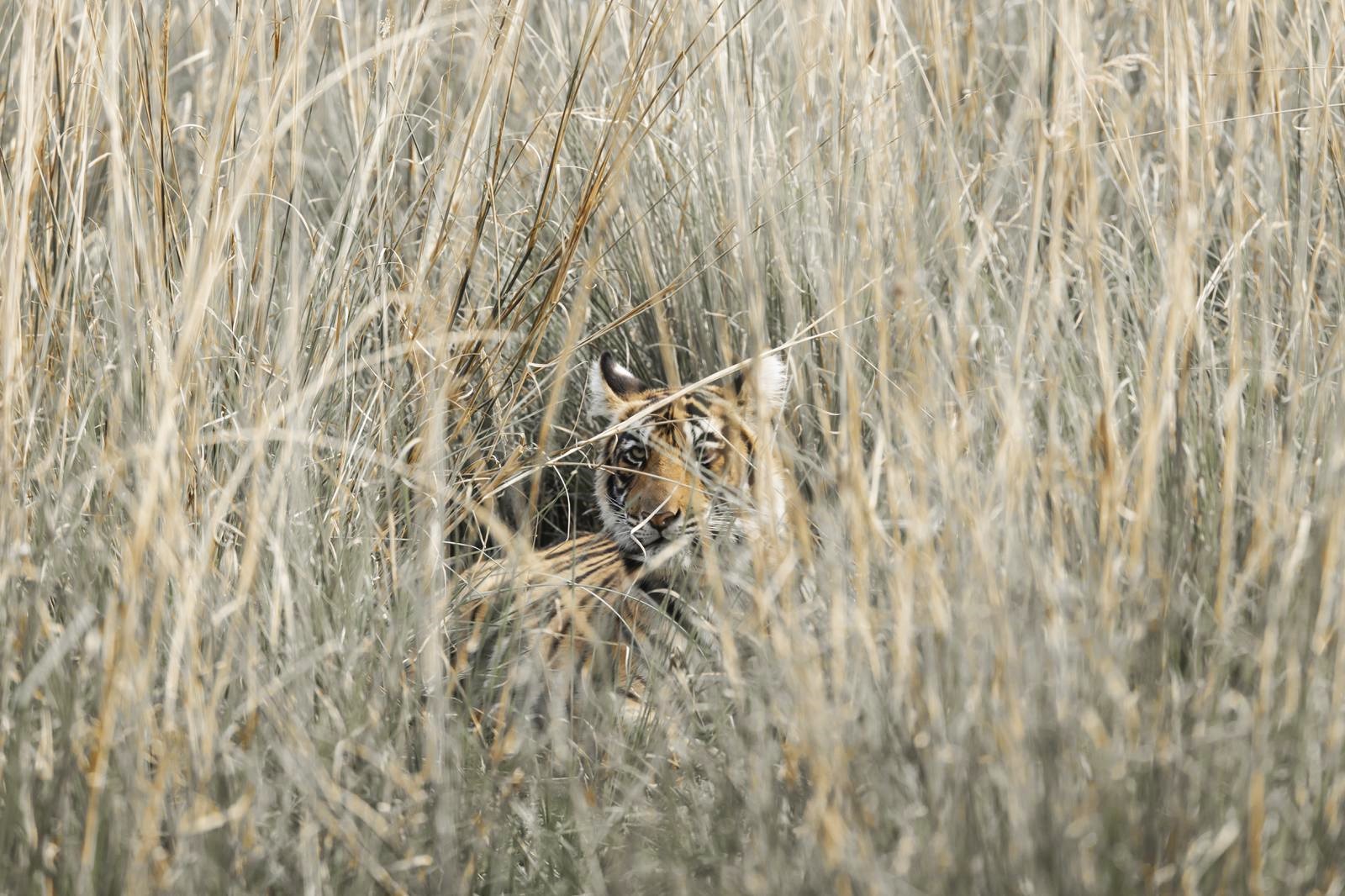
The natural world around Khajuraho is as dramatic as its history. Panna National Park, a short drive into the Vindhya Ranges, serves as a sanctuary for the region’s apex predators and diverse wildlife. A jeep safari through its deep canyons and dense teak forests offers a thrilling opportunity to encounter tigers, panthers, and wild cats. The park is a haven for birdwatchers and nature enthusiasts who may spot the Indian Gazelle, Blackbuck, or spotted deer roaming amidst the lush flora.
Water has carved its own history into the landscape, most notably at the Raneh Fall. Situated twenty-one kilometers away, this site features a breathtaking thirty-foot-deep canyon formed by crystalline granite in shades of red, pink, and grey. Under the bright sun, rainbows frequently dance over the mist of the falls, creating a surreal visual spectacle.
Equally legendary are the Pandav Fall, located along the route to Panna. These falls descend thirty meters from the Ken River into a tranquil pool below. Local lore suggests that the caves at the foot of these falls once provided sanctuary to the Pandavas during their exile, as mentioned in the Mahabharata. Today, this site serves as a lush, verdant retreat where history and nature converge, making it a favored spot for those seeking a peaceful moment of reflection.
The ultimate convergence of past and present occurs annually in February during the Khajuraho Dance Festival, a week-long celebration that breathes life into the silent corridors of history. As the winter chill begins to fade, the western group of temples—specifically the majestic Chitragupta and Vishwanatha temples—shed their roles as ancient monuments and transform into a living, breathing stage. Under the velvet canopy of a moonlit sky, the golden sandstone of the Chandela era is bathed in floodlights, creating a backdrop so surreal it feels as though the stone deities themselves have descended to join the festivities.
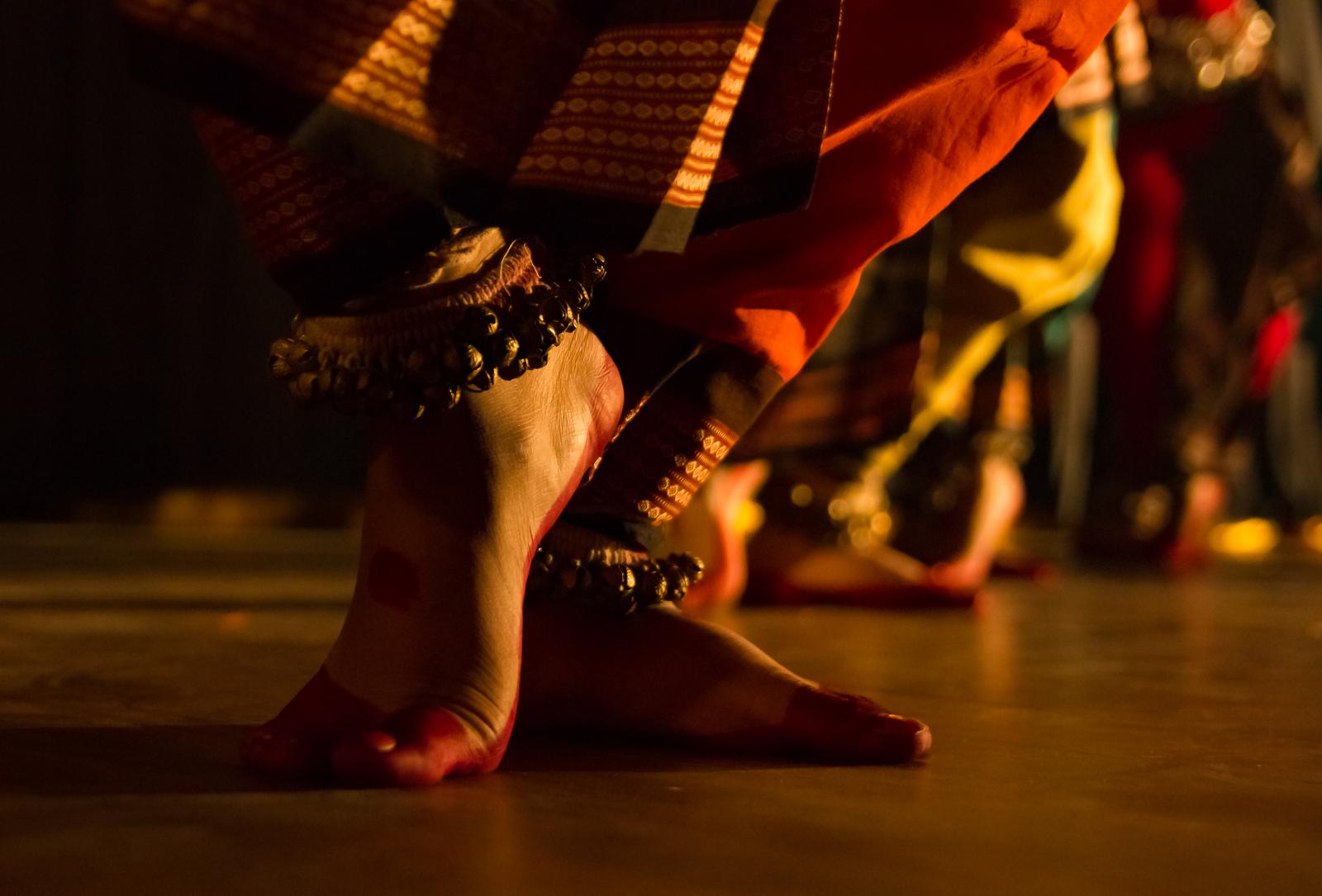
This world-renowned cultural extravaganza is where the architectural grandeur of a bygone millennium meets the rhythmic precision of India’s finest classical dancers. Every footfall, every ghungroo (bell) chime, and every mudra (hand gesture) performed by masters of Kathak, Bharatanatyam, Odissi, Kuchipudi, Manipuri, and Kathakali serves as a bridge across time. The dancers move with a grace that mirrors the "Lila," or divine play, captured in the intricate carvings surrounding them. It is a mesmerizing sight to witness a performer strike a pose that is identical to a thousand-year-old sculpture of an Apsara or a Nayika etched into the temple walls just feet away.
The festival is more than a mere performance; it is a sensory immersion. The air is thick with the scent of incense and the haunting melodies of the flute, sitar, and mridangam. For a few magic hours each evening, the boundary between the mortal and the divine blurs. Visitors from across the globe find themselves transported to an era where art was the highest form of worship, experiencing a symphony of movement and stone that ensures the legacy of Khajuraho remains not just a relic of the past, but a vibrant, pulsing part of the present.